



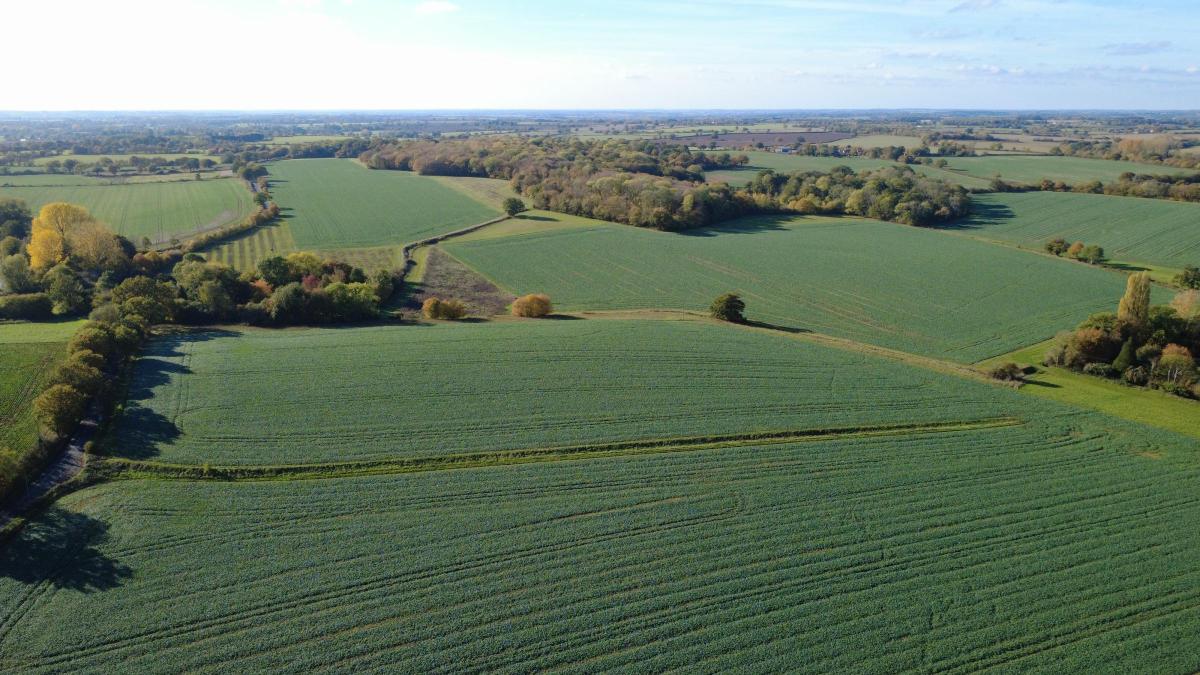
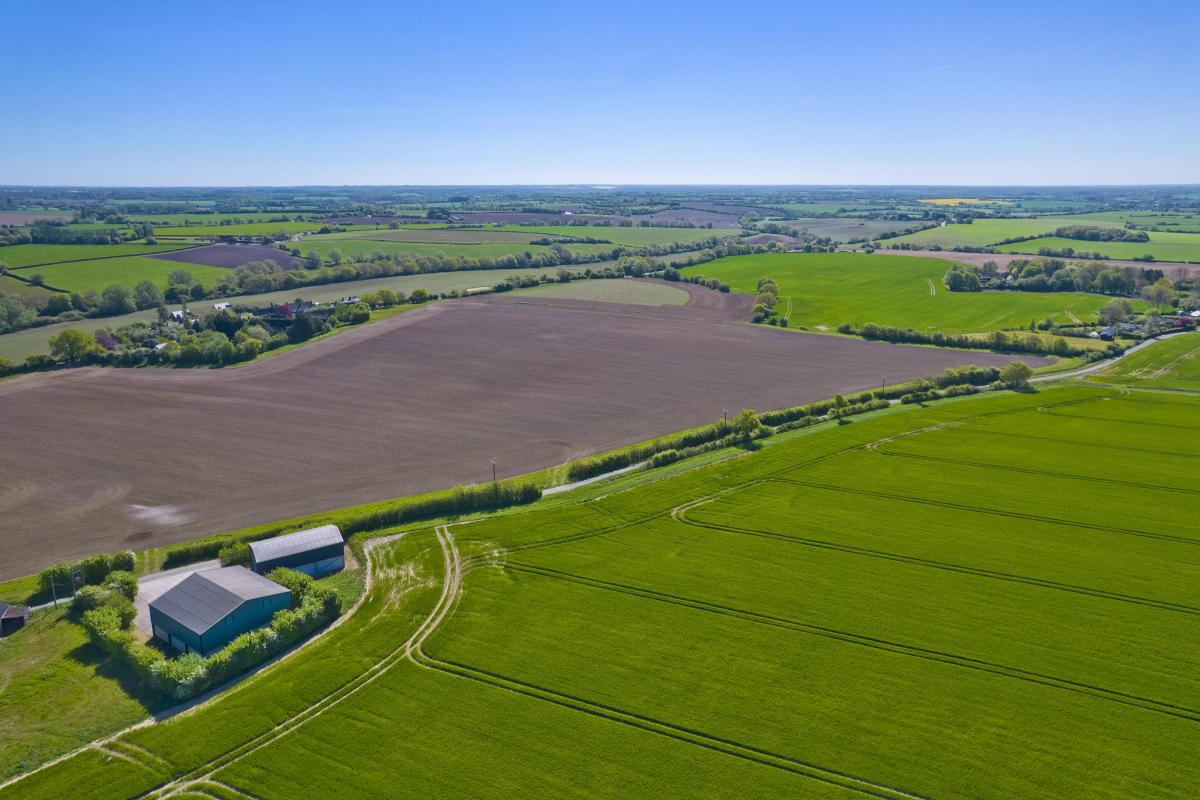

Farmland markets in East Anglia are holding up despite a difficult year for the farming industry.
Suffolk land remains in short supply as buyers take a forensic approach and target the best plots.
Land experts say demand remains strong for good-quality farmland, although prices vary by location and other factors.
SIGN UP HERE FOR YOUR DAILY BUSINESS BULLETIN

Oliver Holloway, a director at Clarke and Simpson, says tax reform, weak farm finances and changing priorities are reshaping the UK farmland market.
Demand for good-quality farmland remains firm, but buyers are selective about what they will pay, he says.
He says the government’s December 2025 decision to amend its inheritance tax reforms offered some reassurance, but the revised rules introduced in April 2026 have not ended uncertainty for many farming families.
The current regime is a significant improvement on the original proposals, he adds, but larger estates and farming businesses remain exposed, making succession planning increasingly important.
Quality is key, he says. Larger, well-located commercial farms with productive soils, good infrastructure, reliable water supplies and scope to diversify continue to attract interest.
Agricultural land remains a sought-after long-term asset, but the market has entered a more cautious phase, he says, with buyers scrutinising poorer or isolated land more closely and demanding better returns.
Clarke and Simpson launched a sale for 240 acres of arable land at Brent Eleigh near Lavenham earlier this month, which has attracted strong interest.
The block is high-quality, productive land in a good location, with mature amenity woodland.
The region’s farmland market has proved resilient, but farming businesses remain under pressure, he says.
He believes the farmland market is likely to remain active but selective, with land’s appeal as a long-term investment underpinned by its limited supply, agricultural importance and potential alternative uses.
He says the market will remain sensitive to farm profits, tax, interest rates and the wider economy.
William Hargreaves, who leads Savills’ rural team in Suffolk, says the farmland market has remained resilient despite continuing economic and political uncertainty.
Average values have softened, but demand remains concentrated on the best farms, he says.
More farmland has come to market in the East of England this year than in 2025, but supply has varied sharply across the region, he says.
Suffolk has been remarkably quiet with just 2,195 acres were offered for sale by the end of September, compared with 6,438 acres in Cambridgeshire and 4,645 acres in Norfolk, according to Savills' research.
Buyers have also become more forensic, prioritising high-quality infrastructure, secure water access, diversification and environmental management, he says.
Much of the activity is being driven by local farmers buying neighbouring land to expand, although investors and corporate buyers are also interested, he says.
Prices vary sharply by area: prime arable land averages £8,960 an acre across the region, down 3.3 per cent on the same period in 2025.
Prices have reached £12,000 an acre where supply is tight and buyers compete, he says.
He says recent experience makes forecasting risky, but there is cautious optimism for 2027 because farmland remains desirable and versatile.
The government sees food production as a priority, but farmland also supports its ambitions for natural capital, energy, environmental management and development, he says, with these competing interests helping to keep values resilient.
Local variations will persist and growth may not return immediately, but farmers and investors will continue to demand the best opportunities, he says.
Giles Allen of Strutt & Parker puts average East Anglian farmland values at about £10,300 an acre in 2026, although he says prices have eased.
The market remains resilient despite mounting pressure on arable farm profits, with quality land and farms still in demand, he says.
Prices range from below £8,000 an acre in less fashionable areas to more than £12,000 where factors such as water access matter; water can add £1,000 to £2,000 an acre, he says.
The highest prices are typically achieved where farmers are expanding, rollover buyers are active or water access is strong.
Values are lower where demand from neighbouring farmers is weaker. Farming returns, especially after a third consecutive poor harvest, are influencing prices more than inheritance tax changes, which the market has already absorbed, he adds.
Supply was strong at the start of the year, with above-average amounts of land coming to market, but slowed in the second half of 2026, he says.
He thinks East Anglia’s supply for the year is likely to finish slightly above the five-year average.
Low profits and rising interest rates are putting some farms under financial pressure, but it is too early to say whether sales will rise significantly in 2027, he says.
Farmers remain the region’s main buyers, while activity from investors and conservation buyers has fallen in recent months.
"It has undoubtedly been a tough year for many, with the drought, rising input costs and administrative chaos surrounding the Sustainable Farming Incentive (SFI) all having a significant impact, but there are farming businesses where strategic expansion remains a viable and attractive option."
Cheffins director Jonathan Purkiss says the land market has stayed buoyant, with good commercial Grade 1 and 2 land fetching strong prices, especially for sizeable fields with easy access.
Well-located parcels with good drainage are fetching about £10,000 to £11,500 an acre, he says.
Lower-quality parcels with awkward shapes or isolated positions fetch about £9,000 to £9,500 an acre. Buyers are mainly farmers or tax investors, he says.
Quality, soil type, location, drainage, access, size and competition all drive prices, he says.


Share